Mem: Life Lessons I Learned from My Amish Mother, Part 2
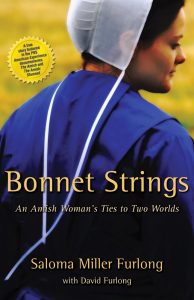
Three years later, in February of 2014, I published my second book, Bonnet Strings: An Amish Woman’s Ties to Two Worlds. That summer I realized that even though I have written two books that recalled memories of my Amish childhood and I did not shy away from writing about the abuse I endured at the hands of my father, my brother, and my paternal grandmother, my readers still do not know the whole truth. When I wrote these books, I was not yet ready to name someone else who had abused me.
I have often thought of myself as someone who is willing to look truth in the face and deal with it, even when it isn’t pleasant. I have seen first-hand how problems do not get solved when there is denial that the problems exist in the first place. It is easy to see when someone else is in denial, but so much harder to detect in myself.
It’s not like I have been in complete denial about this abuse. I dealt with it to an extent when I was in intensive therapy as a young mother. I’ve been able to talk with a few people about what happened — but only with those who could hear it. Those closest to this person would defend her, and then I would doubt myself.
I am referring to Mem. She is the only one of my abusers with whom I identified. How could I not? She was at first my nurturing, loving mother, and my very survival was in her capable hands. This is what made the abuse so devastating. When she began taking out her frustrations on me, she betrayed the bond that she had so carefully formed with me when I was a baby and a young child. Because she was the person on whom my survival depended, it was impossible for me to understand how she could be wrong in punishing me so severely. So I internalized the punishments and thought it was all my fault.
For as long as I could remember, Mem had played the role of the martyr and the saint — in fact she played it so well that it had become part of her personality, so that it was hard to see her otherwise. She had created the myth that she was the good parent who did no wrong while Datt was the bad parent who did no right. It was as if the burden of having Datt for a husband was too much for her to bear, so she looked to others for support. For years, I felt her pain, often to the exclusion of my own. People who knew Mem bought into the myth she had created, including my relatives. I saw her that way myself for a long time. And then when I was in counseling, I realized that I didn’t have one good parent and one bad parent, as I’d been brought up believing.
My relationship with Mem is as complicated as she was. She was at times a soft, nurturing, caring mother, and at other times cruel with her whip or leather belt. She wanted me to conform to the Amish ways, and yet she rebelled against them herself. She married someone who she knew from the start would not be able to be a good father to the children she bore, and yet she tried to change him into one. She played the martyr for being married to Datt, and yet she became the lonely widow when he died. Once she knew she was on her way out of this world, she secretly supported my endeavors, all while garnering sympathy from the other Amish that I’d left. And when she knew she was dying, she asked us not to cling, and said that it was “her time to go” seemingly without any thought about why someone might cling — that perhaps there were relationships that needed mending.
Plain Roots: Community, Story, and Support for Higher Education
We are getting glimpses of Spring up here in northern Vermont. David and I spent…
Traveling South to Meet up with Spring
By the time you read this blog post, David and I will be on the…
How an Amish Boy Became a Physicist, Part 3
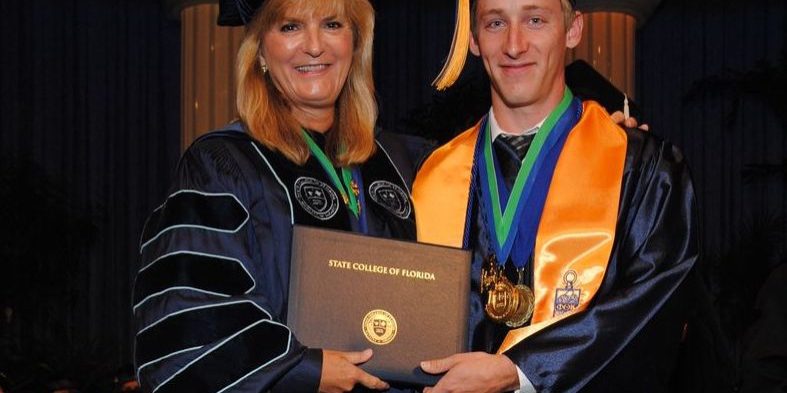
Leon graduating from Florida State University Today we bring you the conclusion of Leon Hostetler’s…
Click on the logo to learn about the Amish Descendant Scholarship Fund.

To order a signed copy of any of my books, please go to my Contact Page. Leave me a message with your email address, and I will send you an order form that you can send through the mail with a check.

Saloma, I don’t know if a hug is appropriate but here is one anyway: {{{{Saloma}}}}.
Elva
Elva, I love hugs, and I feel hugged right now. Thank you!
Saloma, I want to reach out. I, too, was abused by my mother. It is a hard, complicated place not only to be in, but to find support for. As you note, as a young child, you depended on your mother. And so many people cannot handle hearing about mothers who abuse. There are, however, lots of people who were abused, one way or another, by their mothers. I hope you can find people who can hear your experience and support you.
I also echo your discovery that a good parent can be bad. I had to go in the other direction. After beginning to remember my abuse, I had to deal with all the good things that came in the same person. Always complicated.
Johanna, you are exactly the kind of reader I am looking forward to connecting with–someone who knows what it was like and can relate to the story very real ways. It’s always good to hear how others have dealt with this issue.
I know what you mean about the good things that came in the same person. I am trying to reconcile that myself. And you are so right — it’s complicated.
Thank you so much for comments and support.
I’ve gotten lots of support. I love to pass it on.
Thank you, Johanna.
Looking back, I too had an abusive childhood. I was adopted by my aunt who never let me forget that I “owed her”. There were beatings, bloody lips, bruises, etc. Never having had any brothers or sisters (which I desperately wanted) I thought that was the way everyone lived. Getting into my teen years I found out that wasn’t normal. When I got married, I thought I married into the “perfect” family. Years later I found out differently. My mother-in-law (who I loved very much) started to display “control issues”. Looking back I wonder how many mistakes I made, but I tried to be the opposite of what I had to deal with in my younger days. I talk to God a lot and sometimes I get frustrated and say to Him “I wish you could talk to me a little more distinctly!” Sometimes it’s very difficult to understand what He wants from you! But at this stage in my life I’m finding out I wasn’t the only going through issues. I feel I’m probably a stronger person because of it.
Kris, my heart goes out to you. It sounds like you needed an advocate. Every child does, and not all of us are so fortunate. I agree, it does make us stronger. I think that is partly because we had to reach down into our inner resources, which makes a person resilient.
Ha! You thought you married into the “perfect” family. You hadn’t looked closely enough. There is no such family. That would mean everyone in the family would need to be perfect, and no one is.
I LOVE your prayer to God to talk to you more distinctly! These are my sentiments exactly! For what it’s worth, I believe God gave us a conscience for a reason… so we could use it for a guide to steer us in the direction of the good, and away from evil. Being true to oneself, and using our conscience as our moral compass is the best we can do.
Saloma, this is so beautifully and truthfully written/described: “When she began taking out her frustrations on me, she betrayed the bond that she had so carefully formed with me when I was a baby and a young child.”
I feel sad that all this happened to you; that this was your reality tucked under the cloak of “loving family” to outsiders/friends/relatives. This is the very thing Jesus didn’t want to happen. I feel angry at what Mem did to you and I feel empathy for her that she didn’t know any other way. Mind boggling tucked behind the mask of “Amish”.
I marvel at your courage in writing all of this, yet remembering who you are it seems natural 🙂 I wonder how your family and Amish community will react to you and the book. Yes, the truth needs to be told, and maybe in telling it, others will look closer at their own lives to make corrections so that abuse won’t happen in their family. Yes, it seems that this is the only way to stop abuse, as hard as it is.
This passage from Luke 12 comes to mind: In the meantime, when so many thousands of the people had gathered together that they were trampling one another, he began to say to his disciples first, “Beware of vthe leaven of the Pharisees, which is hypocrisy. 2 Nothing is covered up that will not be revealed, or hidden that will not be known. 3 Therefore whatever you have said in the dark shall be heard in the light, and what you have whispered in private rooms shall be proclaimed on zthe housetops.
Denise, that you for your compliments. I don’t think this is more of a human issue than an Amish issue. We are all flawed, and Amish mothers are no exception.
I will be dealing with the issue of how I anticipate my family’s and community’s response to this book in the next post. It is a valid concern.
Thank you for that passage. It fits this so well. Silence shrouds all abuse, and I find the silence needs to be shattered somewhere in the healing process. For me, that time is now.
Thank you, Denise, for your thoughtful comments.
Ah yes the proverbial trip to the “woodshed” Did you also get the words? “this is gonna hurt ME more than it hurts you” or did they not even tell you this?
When I think back to my childhood I remember how Mom’s discipline never really hurt much since she used a yardstick and when it broke it usually only got “doubled up” once. (it could still be used for piecing fabric for quilting) However on the other hand my fathers discipline with a chunk of firewood, hurt “like a bugger” …and oh did i say it “it hurt really really bad” To this very day I smile when I think about my mothers discipline however there was never never and still is nothing funny about my fathers discipline. This reality causes me a lot of deep inner thoughts. I am at peace now only because I know the truth.
It just goes to show how “the rod” of discipline can be determined in various degrees right from one extreme to the other. Who was right and who was wrong? Mom or Dad? On a sidenote, I must confess I know it was also tough on Mom and Dad because I was the first/eldest and definitely the most strong willed child.
Saloma, we could discern very carefully (and we should if it is necessary) if discipline was applied Biblically with true love or if it was abuse in both your case and or mine or anyone elses. Frankly I do not put much weight in what “the world” has to say about this issue.
Without getting into any of that nitty gritty, what jumps out at me in your case is; I KNOW how it would have hurt/damaged YOU when your “Mem” showed MORE love towards “other people” than the Love and Loyalty she showed you at ANY given moment. The fact is that Mem was not only your mother, you were also her daughter and this bond of Love is the most fragile and the most critical one never to abuse. It sounds to me like your mothers “role playing” was way, way offside. (a bistle aup am deeffa end” Otherwise known as “UNJUSTIFIED” I did not even know YOUR mom but I feel anger towards someone who is disloyal that way and I realize that this specific type of disloyalty hurts far more emotionally than the physical perspective. It CANNOT be justified or rectified easily by anyone. The abuse of “that bond” you spoke about is at the very core of the problem that causes a lasting and longterm hurt and THAT was NOT caused by you!
The mother should always know better than the child what is right and wrong, however “Die mem vaest net eime allaus” and so it is gratifying to know that God also instituted marriage and ultimately our Heavenly Father will NEVER leave us or forsake us!
Say Hello to David and BEST Wishes!
Your fellow pilgrim
delmer
Delmar, I am so sorry to hear about your trips to the woodshed. Oh, yes, I certainly did hear the line, “This hurts me as much as it does you.” Even back then I had to hold my tongue from saying, “If that were true, then you would not whip me anymore, because your pain would be too unbearable.”
Perhaps each of us needs to define what abuse is to us. But getting hit with a stick of wood, and getting whipped mercilessly with a whip or leather belt so that I had to hide the welts under my dress for days… in my book that constitutes abuse. A child could not do anything so wrong to deserve either of these methods of inflicting pain.
In my case there were also violations of personal boundaries… in more ways to count. I know that this is not something the Amish value all that much, but I don’t believe that this was as extreme in most families as it was in mine. I didn’t even have one drawer that was private. My diaries were snooped into. And we had a two-seater in the outhouse, so even that wasn’t private… the list goes on and on.
Thank you for your good wishes. The same to you.
Aren’t we humans complicated!!!! Reading the other comments makes me truly realize I am not alone when it comes to parental abuse. Mine was mostly verbal and physiological. My mother could pretend you didn’t exist for days if you got on her bad side, regardless of your age. So as for back as I can remember I knew this punishment. I grew up knowing no hugs, no kisses and was very afraid of her. Before she died she told me a lot about her growing up years and the emotional abuse she endured. That helped me understand her better, but it doesn’t help me understand why she in turn did it to us. I strived to make sure I was nothing like her when raising my boys. Why is it some are doomed to repeat the abuse while others are not? I hope this book helps both men and women understand they are not alone. Saloma I pray that in writing this book that God will grace you with a washing of the Holy Spirit over your heart and soul and give you peace. You have endured so much. Your words will be such a blessing to so many. I’m sure our Lord is well pleased.
Pamela, your kind thoughts brought tears to my eyes. These are my sentiments exactly — that others will understand that they are not alone. I will be going through major issues with my siblings concerning this book, so I have to hope that sharing my story will help others find their healing path.
I am so sorry to hear about the abuse you endured. Your question about why some people pass on the abuse they endured and why some do not is an age-old question. I believe there is a fairly straightforward answer to it — those who choose the healing path have a much better chance of changing the family patterns. Those who remain in denial are much more bound to carry on these unhealthy family patterns.
Be glad your mother opened up to you towards the end of her life. At least you know the source of her issues. Mem never opened up about any abuse in her childhood… in fact she denied there was any. But this I know and know full well… she was abused. There are too many signs of that to ignore. The way I describe it in my book is that trying to discover who my mother was is like trying to find my way through a maze while I’m blindfolded.
Thank you again for your comments, Pamela.